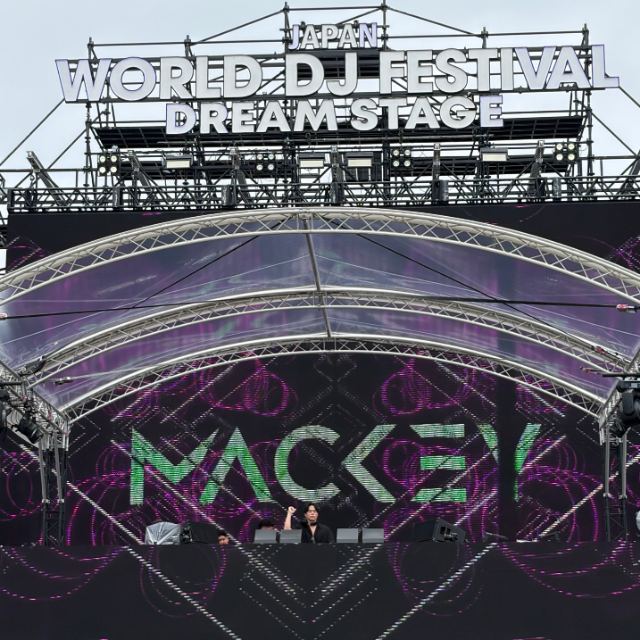
Who is Yousuke Yukimatsu?
Yousuke Yukimatsu is a DJ from Osaka, now based in Tokyo. He is also known by the symbol-laden spelling "¥ØU$UK€ ¥UK1MAT$U."
His selections can't be confined to a single genre: techno, breakbeats, ambient, experimental electronic music, and more.
He drew wide attention with "Boiler Room: Tokyo," released in 2025, but he had already been recognized by clubs and music media in Japan and abroad well before that.
Basic profile
- Name and pronunciation
- Yousuke Yukimatsu (family name Yukimatsu, given name Yousuke)
- Artist name
- Yousuke Yukimatsu/¥ØU$UK€ ¥UK1MAT$U
- Origin and base
- From Osaka, based in Tokyo
- Music
- Spans techno and breakbeats through ambient and noise
- Where to start
- DJ sets at clubs and festivals, and mix recordings
If you listen to three things first, make it these
Boiler Room: Tokyo (recorded November 2024, released 2025)
YouTube / Boiler Room official
Start with the set that spread his name around the world. Rather than just chasing track names, pay attention to how the scene changes each time the next track comes in.
Boiler Room Tokyo x Super Dommune (September 2020)
YouTube / Boiler Room official
A set that goes back to his playing before the big buzz. Compare it with the 2025 set and look for the selection and structure that have run through his work all along.
Resident Advisor official podcast
A mix of about two hours. Step away from the video and focus on the sound alone; it's an entry point for hearing the developments outside the intense moments.
One famous hour doesn't show you Yousuke Yukimatsu's path. What music did he listen to, what venues did he stand in, and who did he connect with before reaching that set? From here, we trace that process.
March 28, 2026, Miami.
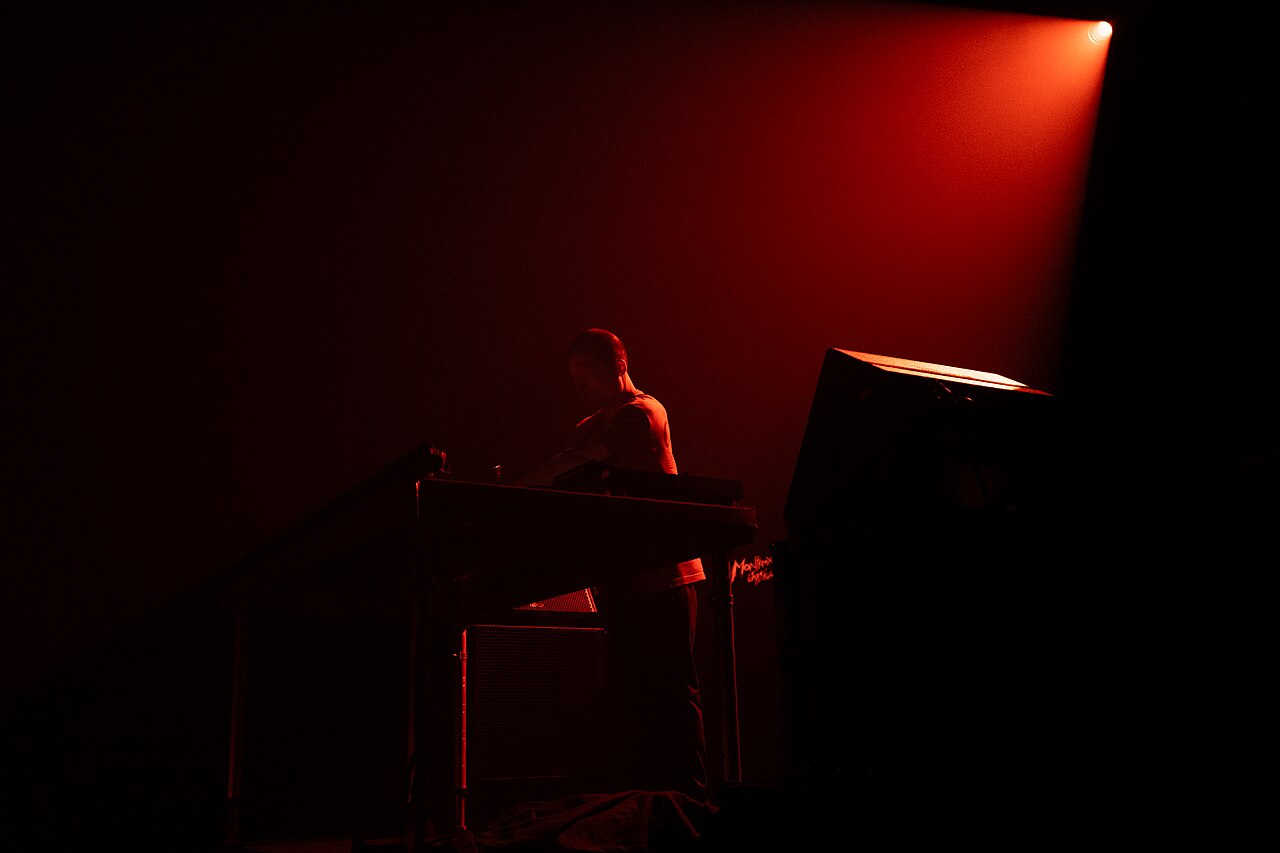
A Japanese DJ stood on the Worldwide Stage at Ultra Music Festival.
Yousuke Yukimatsu. He is now also known by the spelling ¥ØU$UK€ ¥UK1MAT$U.
At Ultra Miami 2026, his name appeared in the "Headliners" category of the official lineup.
But what introduced him to most people around the world was a single video released the year before.
¥ØU$UK€ ¥UK1MAT$U | Boiler Room: Tokyo.
A DJ set of just one hour.
Within 10 days of release it passed 2 million views.
And today that number has passed 20 million.
A DJ set played more than 20 million times worldwide. But it took 17 years to make that one hour.
If you look only at the past few years, he looks like a star who suddenly appeared on the world stage.
But that's not the case.
Boiler Room did not make Yukimatsu.
Boiler Room made the world find a DJ who had been taking shape over 17 years.
One thing I want to be precise about here.
"Headliner" at Ultra doesn't mean he closed the Main Stage. Yukimatsu played the Worldwide Stage on Saturday, March 28. His slot was at 10 p.m., a peak-time set leading into ISOxo at 11 p.m. In the "Headliners" category of the official lineup, his name is listed alongside Armin van Buuren, Hardwell, John Summit, DJ Snake, Carl Cox, and others.
Even so, it is unusual for a DJ who is based in Japan and has not relied on worldwide hit tracks to have risen all the way to the Headliners category at Ultra Miami.
Then on August 8 of the same year,
he played a B2B with Charlotte de Witte at Under The K Bridge Park in Brooklyn, New York.
The two each played a solo set, then joined together for a B2B at the end. After the show, Charlotte described the B2B as "incredible."
Resident Advisor had put Yukimatsu on its cover the year before, in 2025, and even wrote "the DJ of 2025."
B'z, metal, noise. He wasn't a techno person from the start
Yousuke Yukimatsu was born in Osaka in 1979.
His father once ran a record shop out of the family garage. At home, Deep Purple, Led Zeppelin, and The Beatles were playing, he says.
The first music he was strongly drawn to on his own was B'z.
From there he moved on to hard rock and metal like Aerosmith and Judas Priest, and then to Depeche Mode, Sonic Youth, Merzbow, and Boredoms, his interests spreading ever further outward.
This background matters for understanding his later DJ style.
Yukimatsu is not "someone who first fell in love with techno and then became a DJ."
Metal, noise, pop, experimental music: he listened to all of it as one and the same listener.
The way music that normally wouldn't coexist keeps appearing in his sets today is not a character he built after he became successful.
From the beginning, he never listened to music divided by genre.
2008. It started with "Please let me DJ"
He didn't become a DJ right after finishing high school, either.
After working as a swimming instructor and the like, he did physical labor, mainly at construction sites.
Around 2006, he was drawn to the minimal techno of Richie Hawtin, Fumiya Tanaka, and others, and began going to clubs in Osaka.
Then in 2008.
Yukimatsu went to a party in Osaka called atmosphäre, liked the venue's sound system, and asked the organizer on the spot.
I live nearby, so I'll bring my records. Could you let me DJ?
He wasn't a performer.
He was just a guest.
Even so, he was allowed to DJ for about an hour starting around 7 a.m.
He started with Burzum.
No reaction.
Then he played Slayer and went into Richie Hawtin.
The floor suddenly came alive.
This hour is what he himself calls his "DJ debut on the profile."
What's interesting is that the traits that surprised the world in the 2025 Boiler Room were already here.
From metal to techno.
Connecting by the intensity of the sound, not by genre.
And one more thing.
Saying "let me do it" on his own initiative.
That behavior repeats throughout his later career.
DJ Nobu and Future Terror: "First, I was recognized by Japan's core audience"
Yukimatsu kept working mainly in Osaka and Kobe, and came into contact with KEIHIN, DJ Nobu, and others.
In 2014, he played the opening set on the main floor of FUTURE TERROR, hosted by DJ Nobu.
Today, introductions around the world cite this FUTURE TERROR appearance as an important early turning point in his career.
What matters here is that it had nothing to do with mass popularity yet.
Not a huge festival.
Not a social media viral hit.
He was recognized by people in the Japanese underground who seriously listen to DJs.
Yukimatsu's push overseas did not begin after he grew his follower count.
Trust came first, fame after.
Before going abroad, he connected Osaka and the world
From 2015 to 2016, Yukimatsu's contacts with overseas artists grew rapidly.
At a PAN showcase, a B2B with Lee Gamble.
At Oneohtrix Point Never's Osaka show, he was the support.
In 2016, he started his own party, "ZONE UNKNOWN."
He invited cutting-edge overseas artists to the Kansai region, including Shapednoise, Kamixlo, Aïsha Devi, Palmistry, Endgame, Equiknoxx, and Rabit.
How ZONE UNKNOWN started is symbolic too.
DJ Nobu said that Shapednoise wanted to come to Japan, but that he himself wouldn't be in Japan at that time, so would Yukimatsu like to put on an event?
Yukimatsu accepted.
In a later interview, he looked back on it this way: if you hold events, you become friends with overseas artists and your world expands. Those connections led to his activity in Europe as well.
In other words, he didn't suddenly "go overseas."
Before being invited abroad, he had connected the scene where he lived, Osaka, with scenes overseas.
He asked Lee Gamble for a B2B, and had Arca sing
Follow Yukimatsu's career and the same behavior appears again and again.
He asks.
When he shared a bill with Lee Gamble, he proposed the B2B himself.
The next year, when he shared a bill with Arca at an Osaka show, he asked Arca directly, after Arca's live set, to sing during his DJ set.
Arca actually sang.
About this experience, Yukimatsu says that by asking Lee Gamble for the B2B, he came to think "it's better to say it than not to."
2008.
"Please let me DJ."
2015.
"Want to do a B2B?"
2016.
"Please sing during my DJ set."
And in 2026, he plays a proper B2B show with Charlotte de Witte.
Of course, this is not a story that "if you ask, your dreams come true."
He already had the kind of DJing that made the other person say yes when he asked.
But he also didn't think that if you have the skill, someone will find you on their own.
He built his ability and went after opportunities himself, at the same time.
2016: A brain tumor changes his life's priorities
July 2016.
Yukimatsu collapsed at home, and a brain tumor was found.
He then underwent two surgeries to remove it.
At the time, he worked at job sites on weekdays and DJed until morning on weekends. Sometimes he went straight to work without getting enough sleep, he says.
After treatment, his life changed.
He left construction work and began living with DJing at the center.
It's better not to turn this into a story where "he became a genius DJ because he experienced illness."
Before he got sick, he had already been DJing for eight years.
He had played Future Terror.
He had shared bills with Lee Gamble and Arca.
He had already started ZONE UNKNOWN.
The illness didn't create his talent.
It changed his priorities: how much of his life's time to spend on what he had already built up.
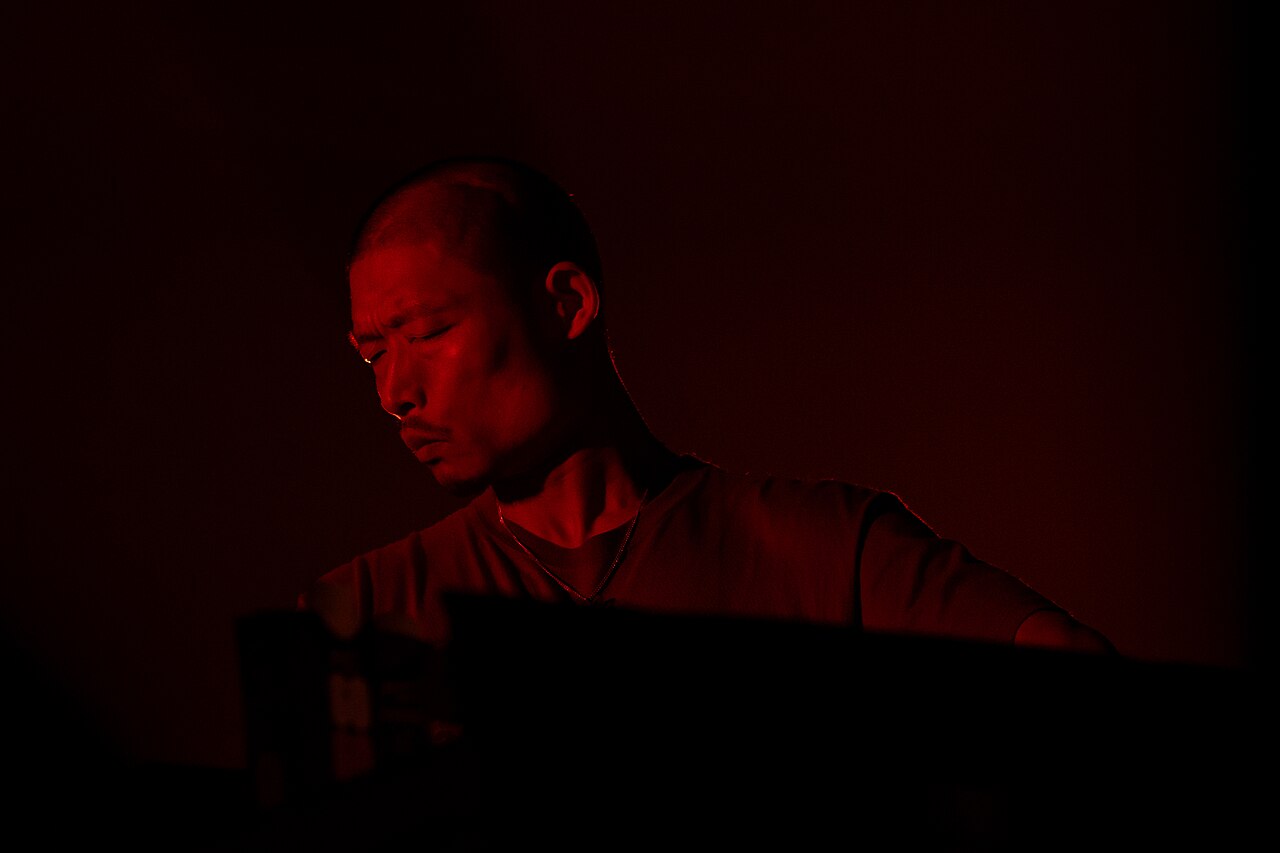
At around 37, he DJs abroad for the first time
His first overseas DJ gig was in Shanghai.
By his own recollection, he was around 37.
Compared with the typical career of a young DJ aiming for the world, that is quite late.
But from there, his reputation abroad kept building.
2017, Berlin Atonal.
2018, Berlin Atonal again.
He went deep into the context of European experimental music, the avant-garde, and club culture.
After that, he began playing Berghain, too.
Here an important structure takes shape that leads to the Yukimatsu of today.
Before the average music fan around the world,
DJs.
Promoters.
Festival bookers.
Music writers.
Core listeners of experimental music and club culture.
These people knew Yukimatsu first.
2022: Before Boiler Room, results in both criticism and on the internet
In 2022, he released the mix project "Midnight Is Comin'" on Midnight Shift in Singapore.
Pitchfork reviewed it.
What's interesting is that what Pitchfork focused on was not only the "intense Yukimatsu who plays anything" that is widely known now.
"Midnight Is Comin'" is a long, slow mix centered on ambient, drone, and noise.
Pitchfork rated highly the way he combined things and the immersion it created.
In other words, the essence of what is praised is not "someone who plays surprising tracks."
It's how he combines one track with another and how he builds time.
It was his editing ability as a DJ itself.
That same year, 2022, he also appeared on the Resident Advisor Podcast.
And his HÖR Berlin set passed 2 million views in just under 10 months.
Three years before the 2025 Boiler Room, there was already a big response online.
Before Boiler Room,
trust in the field, trust from critics, and a track record on the internet.
All three had begun to line up.
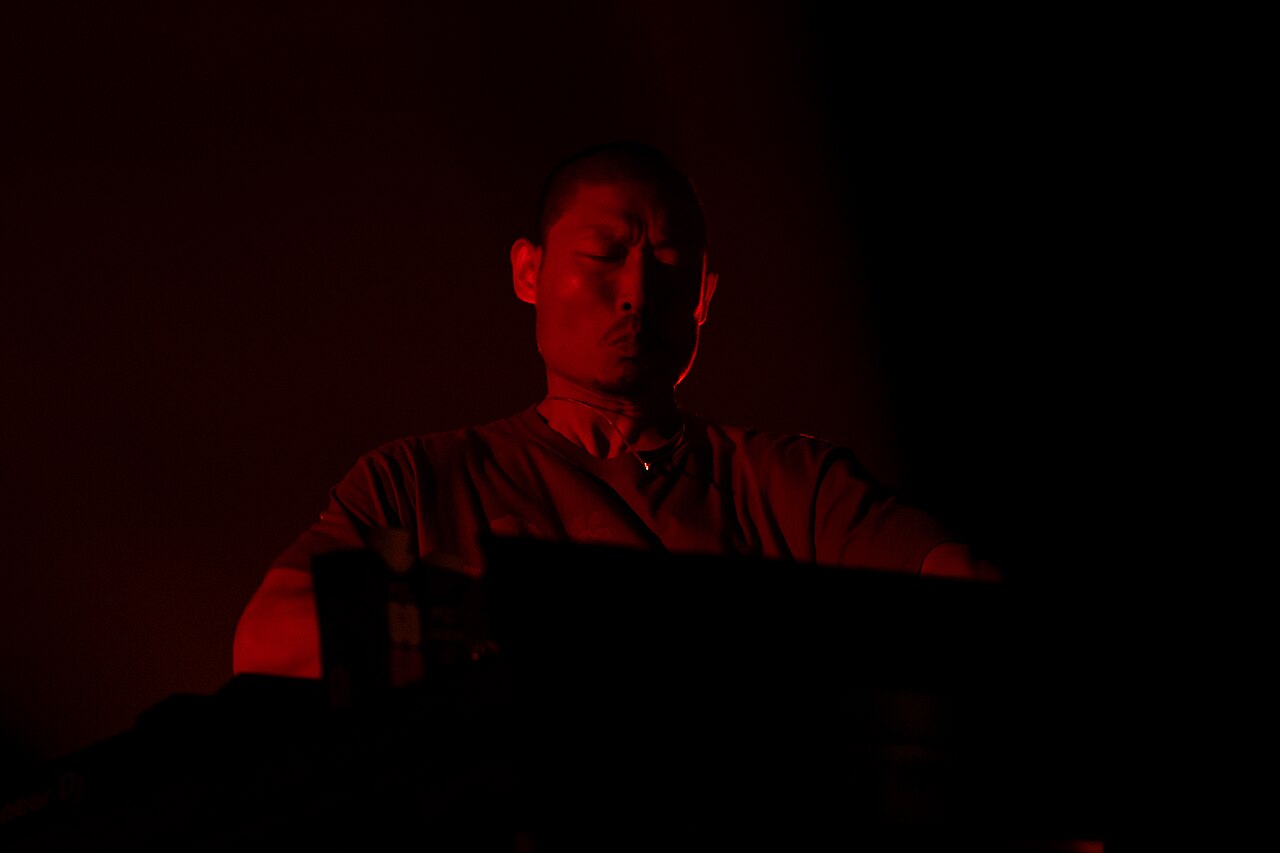
After reaching Berghain, he was "discovered" through Boiler Room
In 2024, he also played Berghain's Klubnacht several times.
And in November of that year, he recorded Boiler Room Tokyo.
The video was released in 2025.
That is where it exploded.
According to Resident Advisor's current profile, it reached 2 million views within 10 days of release.
By the time Billboard JAPAN interviewed him in 2026, it had passed 18 million on YouTube alone.
For many people, this video was "the moment they first learned of Yousuke Yukimatsu."
But line up the timeline and the meaning changes.
Future Terror.
Lee Gamble.
Arca.
ZONE UNKNOWN.
Berlin Atonal.
Pitchfork.
RA Podcast.
HÖR Berlin.
Berghain.
Then Boiler Room came.
Boiler Room did not make Yukimatsu. Boiler Room distributed a fully formed Yukimatsu to the world.
That Boiler Room was actually quite carefully prepared
Looking only at the video, Yukimatsu's DJing seems impulsive.
Shirtless.
Dancing wildly.
The genres keep changing.
It can even look like he's throwing in whatever track comes to mind, on the energy of the moment.
The reality is quite different.
In his Billboard JAPAN interview, Yukimatsu explains that he usually improvises, choosing from a playlist of tracks at every BPM to suit the flow of the day.
Boiler Room, on the other hand, had a one-hour slot known from the start.
So he thought, "this is the one," and built the set carefully.
In other words, that hour was not a chance miracle.
It was a work edited, for a single chance to reach the world, by a DJ with 17 years of accumulated improvisational ability.
He loves movies, and says he hopes his sets, like a film that shows you different things on the first and second viewing, hold new discoveries no matter how many times you watch.
This idea matters too.
He thinks of a DJ set not as background music consumed in the moment, but as a work that can be watched repeatedly.
That's why it suits the era of video.
Yukimatsu's DJing can't be explained by "genreless" alone
When people describe Yukimatsu, the most common phrase is "a DJ who crosses genres."
It's not wrong.
But that alone isn't unusual.
There are DJs all over the world who play many genres.
What matters is why it doesn't fall apart.
Using the 2020 Boiler Room Tokyo as an example, Pitchfork described a set that moves from Moby's ultra-fast hardcore to bass music, extreme noise by Kenya's Duma, The Weeknd, the theme from the film "Rocky," and Jamie xx.
Normally that would collapse.
But Pitchfork also praised how Yukimatsu's wide-ranging set holds together as a single immersive piece.
One of the keys is "intensity."
In past interviews too, Yukimatsu emphasizes "intensity" in how he thinks about music.
The ferocity of metal.
The pressure of noise.
The emotion of pop.
The tension of quiet music.
Even if the genre names differ, if the strength needed at that moment is shared, it can become one flow.
That's why he can go from Slayer to Richie Hawtin.
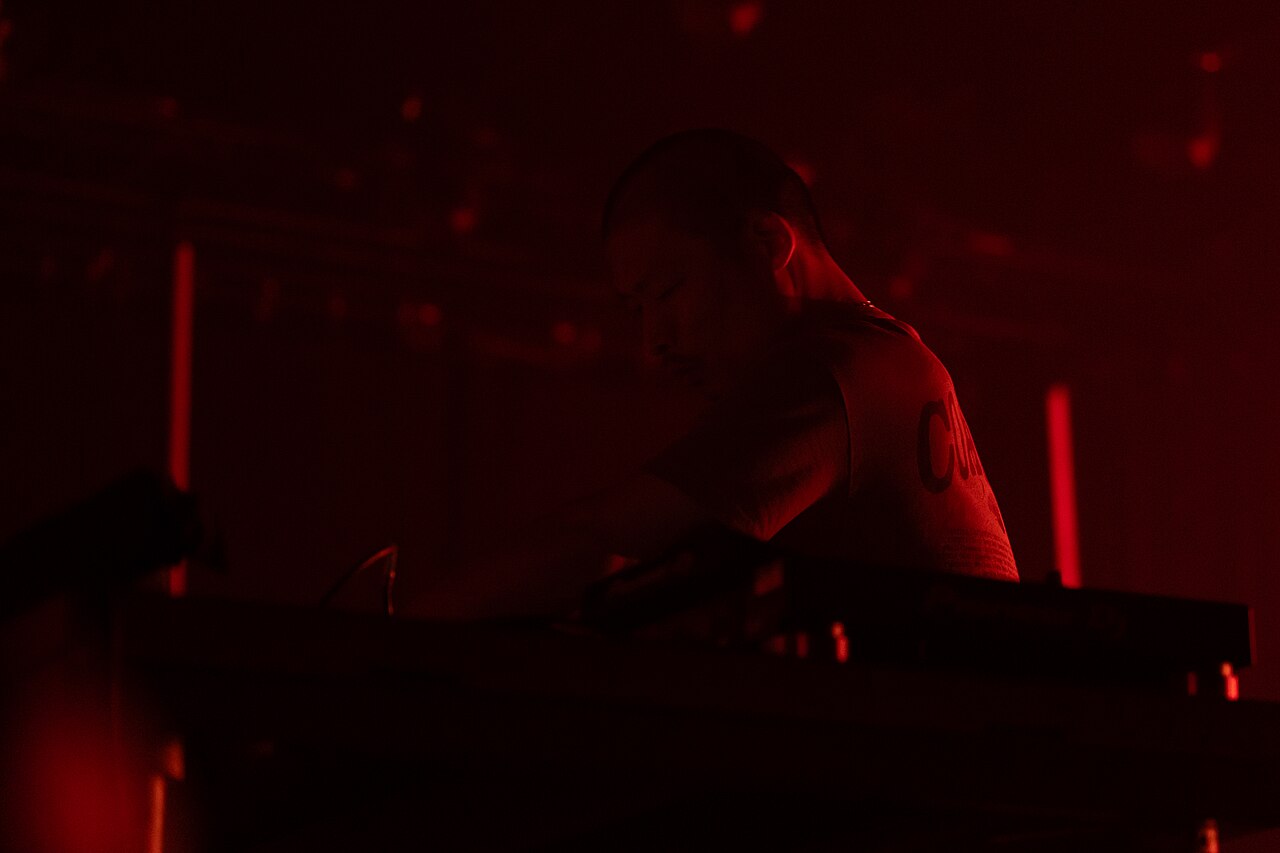
Technically, he does fairly orthodox things at an extraordinary level
Watching Yukimatsu DJ, you might think there must be special effects or secret techniques.
Reading his own explanation, it is rather basic.
If the melodies of two tracks clash, he lowers the mids.
If necessary, he adjusts the volume too.
He looks for where the next track can come in.
And even now, he keeps practicing mixing two tracks together.
What matters is that he doesn't memorize fixed values such as setting the highs at the 12 o'clock position or cutting the mids by so many dB.
He searches by ear for the position that feels good in that moment.
In the Billboard JAPAN interview, he says he has sometimes been asked "what remix is this?" when he had simply layered two tracks.
This is the core of Yukimatsu's technique.
He doesn't just pick tracks; he turns the time in which two tracks are layered into new music itself.
What makes his genre-crossing work is not only eccentric selection.
Underneath it are the basic DJ skills: EQ, volume, timing, phrasing, and judgment by ear.
He plays "a DJ set that can only be done in that city"
There is one more clear rule in Yukimatsu's selection.
He looks at the place.
In Australia, AC/DC.
At Lollapalooza, Jane's Addiction, whose singer Perry Farrell founded the festival.
In Seattle, Nirvana, Pearl Jam, and Soundgarden, tied to that land.
At Boiler Room Tokyo, he says he built the final stretch with the theme of "world peace" in mind.
This is not mere fan service.
The history of the event.
The memory of the place.
The DJs playing before and after.
The label.
The audience.
He takes that context into the set.
He has said, in effect, that a DJ is an artist and also an entertainer.
He doesn't simply impose his own aesthetic.
But he doesn't just line up songs the audience knows, either.
He layers a selection only he can make with a selection that only has meaning in that place.
That's why he can adapt both to experimental venues like Berlin Atonal and to huge festivals like Ultra Miami.
He went to the world as a "DJ," not as a producer
The standard route to becoming a world-class DJ in today's dance music is quite clear.
Make tracks.
Get them to hit.
Release them on a label.
Build numbers on Spotify and YouTube.
Take that track popularity into live shows and festivals.
Martin Garrix, John Summit, and Charlotte de Witte are all powerful producers as well as DJs.
How John Summit took that route is covered in another article.
Yukimatsu is quite different from this route.
In his 2026 Billboard JAPAN interview too, he says he has hardly been able to make his own tracks and thinks of himself as a "DJ."
Even so, he went to Coachella.
At Ultra Miami he was in the Headliners category.
Resident Advisor called him "the DJ of 2025."
He played a B2B with Charlotte de Witte.
This is big for people who want to become DJs.
Yukimatsu did not
gain fame as a producer and also DJ.
Instead,
he went to the world by making DJing itself the work.
Selection.
Mixing.
Structure.
Physicality.
Response to place.
The story of the whole set.
That itself became content.
Why did he reach the point of a B2B with Charlotte de Witte?
August 8, 2026, New York.
Under The K Bridge Park.
Charlotte de Witte and Yousuke Yukimatsu each played a solo set, then closed the event with a B2B.
The show had been officially sold for several months as "Charlotte de Witte b2b Yousuke Yukimatsu."
After the show, Charlotte described the B2B with Yukimatsu as "incredible."
At the announcement, Yukimatsu also said he had long liked Charlotte's music and played many KNTXT tracks in his own sets.
The two styles are not the same.
If anything, they differ.
Charlotte moves huge audiences, centered on techno.
Yukimatsu leaps over genre itself.
That is exactly why it is interesting as a B2B.
And if you look back at the career from the beginning, you can see a single line here too.
In 2008, at 7 a.m. in Osaka, he asked, "Please let me DJ."
In 2015, he asked Lee Gamble for a B2B.
And 18 years later, he plays a proper B2B show in New York with one of the world's leading DJs.
This is not the career of someone who went viral by chance, once.
Lay out the 17 years and the order of success becomes visible
A simplified version of Yukimatsu's career goes like this.
- 2008
- DJ debut on his profile, in Osaka.
- 2014
- Plays FUTURE TERROR, hosted by DJ Nobu.
- 2015
- B2B with Lee Gamble. Supports Oneohtrix Point Never's Osaka show.
- 2016
- Starts ZONE UNKNOWN. Shares a bill with Arca. Brain tumor surgery.
- 2017
- Plays Berlin Atonal. His overseas activity gets going in earnest.
- 2018
- Plays Berlin Atonal again.
- 2020
- Plays Boiler Room × Super Dommune.
- 2022
- Releases "Midnight Is Comin'." The Pitchfork review, RA Podcast, and HÖR Berlin set grow big.
- 2023–2024
- Expands appearances at international festivals and European clubs. Also plays Berghain.
- November 2024
- Records Boiler Room Tokyo.
- 2025
- The video spreads worldwide. 2 million views in 10 days, then past 20 million. Resident Advisor puts him on its cover and calls him "the DJ of 2025."
- 2026
- Plays Lollapalooza, Ultra Miami, Coachella, and more. B2B with Charlotte de Witte in New York.
Seen this way, the order is quite clear.
Originality → local trust → trust among the international core → criticism → online track record → big viral buzz → mega festivals.
It did not start with Boiler Room.
Boiler Room was the final accelerator.
What DJs can learn from Yukimatsu
From here, it's interpretation.
If you turn Yukimatsu's story into "if you keep going without giving up, your dreams come true," it's of almost no use.
It can be broken down much more concretely.
1. Before he was successful, he made something only he had
Long before he was known to the world, he was connecting Slayer to Richie Hawtin.
He didn't become genreless to get buzz.
He went viral after more than a decade of being a genreless DJ.
2. Before the masses, he earned the trust of the discerning
Future Terror.
Berlin Atonal.
Berghain.
Pitchfork.
Resident Advisor.
HÖR Berlin.
Trust from DJs, bookers, and critics came before name recognition among the general public.
3. Before being called from abroad, he connected with abroad
With ZONE UNKNOWN, he brought overseas artists to Osaka.
He didn't start "going overseas" by getting on a plane.
He built the network first.
4. He didn't just wait for chances
Let me play.
I want to do a B2B.
Please sing during my DJ set.
He went and made happen what wouldn't happen unless he said something.
5. For the one viral moment, he prepared thoroughly
Usually he improvises.
But for Boiler Room, he built the hour carefully.
He trained freely until the chance came, and when it did, he didn't leave it to chance.
6. He never dropped the fundamentals
Behind the flashy selection, he still practices mixing two tracks.
EQ.
Volume.
Timing.
Ears.
Because he stacked up the fundamentals to an extreme, selections that wouldn't normally work do work.
From Japan, you can go to the world as "just a DJ"
When the talk turns to producing world-class dance music artists from Japan, it usually goes like this.
Let's make a track that works on the world stage.
Of course, that remains the standard route.
But Yousuke Yukimatsu showed that another path exists.
A global breakthrough in his mid-forties.
He didn't rely on a huge original hit.
He didn't start by moving abroad.
He kept honing the act of DJing itself in Japan.
As a result, his name appeared in the Headliners category at Ultra Miami, he played Coachella, and he got to the point of a B2B with Charlotte de Witte.
Asked in the Billboard JAPAN interview about Boiler Room going so viral, Yukimatsu essentially looked back like this.
What he does hasn't changed at all.
That may be the most important thing in this story.
He didn't remake himself to fit the world.
For 17 years, he kept updating his own DJing.
And in the end, the world found it.
What was played more than 20 million times was a one-hour video.
It took 17 years to make that one hour.
Main references
TURN, "¥ØU$UK€ ¥UK1MAT$U Interview"
turntokyo.com/features/interviews-yousuke-yukimatsu
Resident Advisor, "¥ØU$UK€ ¥UK1MAT$U" artist profile / biography
ra.co/dj/yosukeyukimatsu-jp
ra.co/dj/yosukeyukimatsu-jp/biography
Resident Advisor, "The Art of DJing: ¥ØU$UK€ ¥UK1MAT$U"
ra.co/features/4445
Resident Advisor, "¥ØU$UK€ ¥UK1MAT$U: Firestarter"
ra.co/features/4447
Pitchfork, "¥ØU$UK€ ¥UK1MAT$U: Midnight Is Comin’"
pitchfork.com/reviews/albums/yousuke-yukimatsu-midnight-is-comin
Billboard JAPAN
www.billboard-japan.com/special/detail/5207
Ultra Music Festival
ultramusicfestival.com
Local 10, "Ultra Music Festival Day 2 lineup"
www.local10.com/entertainment/2026/03/26/ultra-music-festivals-day-2-here-is-the-lineup-for-saturday
The Bowery Presents / Under The K Bridge Park
bowery-prod-terminal5nyc.azureedge.net/new-york-metro/venues/under-the-k-bridge-park