The More AI Advances, the More Festivals Are Worth. Big Capital Has Started Buying "Passion That Can't Be Copied"
Investors who are pouring huge sums into AI companies are also starting to buy sports teams, live venues, and festivals.
At first glance, that looks like investing in opposite directions.
On one side, AI.
Software.
Digital.
Automation.
On the other,
festivals.
Live shows.
Sports.
Clubs.
Enormous venues.
A thoroughly analog world, where people make the effort to show up in person.
But this probably isn't a contradiction.
They are buying both precisely because they see the same future.
The more AI makes it possible to produce unlimited amounts of digital things,
the more some things go up in value.
Things that can't be copied.
Things you can't experience unless you go to the place.
Things that only exist when you share the same time with other people.
And,
things that make people go wild.
The world's big capital is starting to move there.
What Thrive, the OpenAI bettor, started buying next
The clearest symbol of this movement is Thrive Capital, led by Joshua Kushner.
Thrive is known as a major investor in OpenAI.
Reuters reported that in OpenAI's large 2024 fundraising round, Thrive invested more than $1 billion, and also secured a special right to invest another $1 billion the following year, depending on conditions. (reuters.com)
In other words, an investment firm that has bet very heavily on the future of AI.
In 2026, Thrive launched a new investment firm.
Thrive Eternal.
As the name suggests, it is a permanent-capital investment vehicle, designed to hold assets for longer than an ordinary VC fund.
One of its first investments is MLB's San Francisco Giants.
And as for what Thrive Eternal will target going forward, Axios reports it this way.
"qualities that cannot be replicated by technology"
In other words,
assets with qualities that technology cannot replicate.
The candidates include not only pro sports but also
iconic live-event venues and festivals. Former Disney CEO Bob Iger is also said to be deeply involved.
This is the important part.
It is not that investors pessimistic about AI are fleeing digital and heading for analog.
Quite the opposite.
One of the investors who has bet hardest on AI has started putting capital into things that AI cannot replicate.
Where does scarcity move in the age of AI?
Why?
Let's think a little about the future.
In the past,
writing text.
Drawing pictures.
Making songs.
Making videos.
Building software.
All of these required human time and skill.
So the ability to make something was itself valuable.
But generative AI is rapidly changing that premise.
Text can be produced in huge volumes.
So can images.
So can video.
So can music.
In the future, even games and films may be generated in large quantities for each individual user.
Then the supply of digital content grows without limit.
But the time humans have does not grow.
A day has only 24 hours.
We have two ears.
Two eyes.
One body.
In other words, the more AI mass-produces,
what becomes scarce is not content but human attention.
And beyond that, what becomes scarce is
time and place in the real world.
Tomorrowland can't be copied
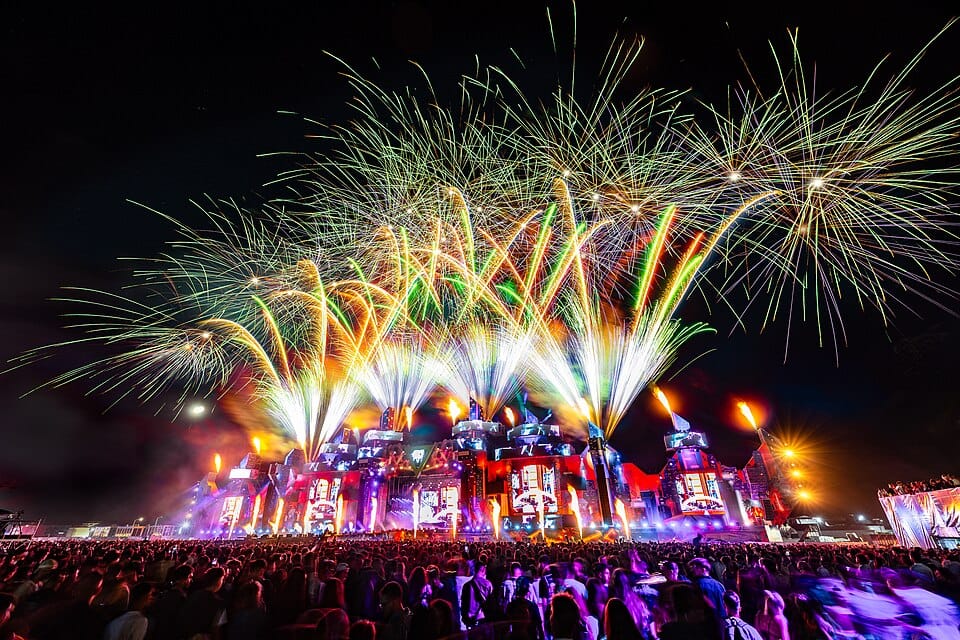
Consider a festival like Tomorrowland.
You can listen to the music on Spotify.
You can watch the DJ sets on YouTube.
In the future, if you ask an AI,
"Make me a set that sounds like Tomorrowland,"
it will be able to make hours of it.
It can generate video, too.
AI could make thousands of videos of an imaginary festival with a giant Tomorrowland-style stage.
Even so, the experience of
actually going to this year's Tomorrowland
cannot be generated.
The weather that day.
The friends you went with.
Meeting strangers.
The moment 50,000 people screamed at the same drop.
The walk home.
The exhaustion.
The smell.
The bass you felt in your body.
The memory of "I was there."
This can't be copied.
It can't be generated again, either.
So the more digital things are supplied without limit by AI,
the more the relative scarcity of finite experiences rises.
Isn't that exactly what Thrive Eternal is aiming at?
And it's not just Thrive
If this were just the unusual investment philosophy of Joshua Kushner alone, it wouldn't be that interesting.
But looking at the movement of capital around the world, investments in the same direction have increased considerably.
Of course, there is a caveat.
KKR, CVC, and others have not explicitly said
"We're buying because AI will raise the value of festivals."
So it would be sloppy to explain every investment as an "AI hedge."
However,
the hypothesis Thrive put into words, "things technology cannot replicate," overlaps quite a lot with where huge capital is actually going.
That is what is interesting.
KKR and CVC bought more than 80 festivals in one go
In 2024, KKR, one of the world's largest investment firms, acquired the live entertainment company Superstruct Entertainment.
Superstruct is
Sónar.
Defqon.1.
Parookaville.
Wacken Open Air.
Sziget.
Boardmasters.
and more: a huge group that operates more than 80 music festivals across 10 countries.
CVC later invested alongside KKR.
And KKR's official announcement states the reason for the acquisition quite plainly.
It believes consumer spending is shifting from "things" to "experiences," and that demand for live entertainment will keep growing.
That is what it says.
This is a huge bet.
They did not buy a single festival.
Giant private equity put capital into the very market of people gathering in real places to enjoy music.
And then they bought Boiler Room
It gets even more interesting from here.
In 2025, Superstruct, owned by KKR and CVC, acquired Boiler Room from DICE.
Boiler Room itself states on its official site that it was sold to Superstruct in January 2025.
Boiler Room is not an ordinary festival company.
It doesn't own huge tracts of land.
It doesn't own giant arenas.
What Boiler Room has is
a brand.
A format.
A community.
Relationships with DJs.
Connections to local scenes around the world.
And,
the power to make people think "I want to go if it's Boiler Room."
In other words, what the capital is buying is not only venues.
It is also
IP that moves people to real places.
This connects perfectly with what I wrote in the previous article:
"from boxes to IP."
Pacha sold for €300 million
The same movement exists in nightclubs themselves.
In 2023, FIVE Holdings acquired Pacha Group for €302.5 million.
The deal covered not only Pacha Ibiza but also hotels, events, and the Pacha brand and trademarks.
What matters is that
they didn't just buy real estate called a "nightclub."
They bought Pacha as IP.
And it has kept growing since the acquisition.
According to FIVE, Pacha Group's 2025 revenue was €132 million, up 18% year on year.
EBITDA was €41 million.
Pacha Ibiza sold about 484,000 tickets, up 27% from the previous year.
In the previous article, I wrote that
"ordinary late-night clubs may be in trouble."
That doesn't contradict this.
If anything, it may be that
ordinary clubs weaken while value concentrates in clubs that have become global IP.
$550 million for Tao Group, too
In 2023, the investment firm Mohari Hospitality acquired Tao Group Hospitality at an enterprise value of $550 million.
Tao Group runs not only restaurants but also huge nightlife brands such as
OMNIA.
Marquee.
Hakkasan.
TAO Beach.
Wet Republic.
and more.
Here too, what the capital is buying
is not simply club venues.
It is
a nightlife format and brand that can be rolled out to cities around the world.
A brand like
"I'm going because it's OMNIA,"
"I'm going because it's Pacha"
is worth more than an ordinary box.
Live Nation is putting nearly $1 billion a year into "physical venues"
Even clearer is Live Nation.
In 2025, Live Nation announced a plan to invest $1 billion in building and renovating 18 music venues in the United States.
The company's planned 2025 capital expenditure was $900 million to $1 billion.
Of that, $700 million to $800 million was planned for expanding and improving venues.
In fact, the company's 2025 capital expenditure came to about $1.05 billion, above the top of the planned range. Of that, about $930 million was revenue-generating spending, focused mainly on venue expansion.
And Live Nation expects an average IRR of over 20% from those venue investments.
This is quite symbolic.
In the very same era when the world is investing hundreds of billions of dollars in AI data centers,
enormous capital is also going into
buildings where people gather in one place to watch music.
Because it sees that demand as not going away.
And in Japan, the financial firm SBI bought a festival
Now let's look at Japan.
In September 2025.
SBI Holdings acquired a majority of the issued shares of the company that operates the large music festival "MUSIC CIRCUS," making it a consolidated subsidiary.
A financial company bought a festival company.
And the words SBI itself gave as the reason are very interesting.
"the ability to form passionate communities starting from real events"
Even this alone is quite close to our theme.
What SBI wanted was not just festival revenue.
It was
"the ability to gather people and make them go wild."
Lay out everything SBI has done, and the meaning changes again
MUSIC CIRCUS alone might look like a coincidence.
But line up what came after, and it looks completely different.
In 2026, SBI entered a capital and business alliance with W TOKYO, which runs TOKYO GIRLS COLLECTION.
The purpose explicitly includes creating value from IP and content.
It also moved toward making Star Music Entertainment, which runs a music business and social media marketing, a subsidiary.
It is in talks with Minkabu, which owns livedoor and others.
It is in talks with Brave group, which runs VTubers.
It has also entered a capital and business alliance with GENDA.
As SBI itself explains, it is trying to build
the "SBI Neo-Media Ecosystem," fusing finance, IT, and media.
This is no longer a story of
a financial company dabbling in entertainment on the side.
SBI calls it the "emotion economy"
Then in June 2026.
SBI began talks with Fuji Media Holdings on a strategic partnership in the media and content area.
The subtitle of that release is quite something.
"Toward the joint building of an 'emotion economy' that connects 'what we love' and 'empathy and passion' to value"
SBI clearly sets out a vision of generating economic activity starting from
empathy for content.
Trust.
Passion.
Specifically, it is considering connecting
broadcasting.
Streaming.
Real events.
Sponsors.
Regional consumption.
Fan communities.
Financial functions.
Investment in IP.
Having come this far, the future SBI sees is quite clear.
Make human emotion itself the entrance to an economic sphere.
They are even planning a Tokyo version of Sphere
A symbol of SBI's direction is the plan for a Tokyo version of Sphere.
In April 2026, SBI disclosed that it is considering building a large arena in Tokyo modeled on "Sphere," the giant immersive venue in Las Vegas.
Odaiba is the candidate site.
Negotiations with MSG Entertainment of the US.
The construction cost was estimated at the time at about 350 billion yen.
Yoshitaka Kitao has also mentioned that, depending on circumstances, it could reach close to 500 billion yen.
At this point it is only a concept and under negotiation; construction has not been decided.
Even so, the meaning is large.
A giant financial group working on AI, finance, and Web3 is considering, as its next growth area,
a giant entertainment facility costing hundreds of billions of yen, where people physically gather.
It is hard to think this is a coincidence.
They see F1 as a "giant media," too
In 2026, SBI also became an official presenting partner in the media segment of the F1 Las Vegas Grand Prix.
And how SBI itself describes F1 is interesting.
Urban space.
Visual production.
Hospitality.
Fan experience.
Digital distribution.
All of these combined into "city-integrated entertainment."
It even uses the expression
"the city itself becomes a giant medium."
Here the meaning of "media" changes.
It's not only television.
It's not only websites.
Festivals become media.
F1 becomes media.
Sphere becomes media.
People gather there, emotions move, videos are shot, and they spread on social media.
Physical space itself becomes a content-generating machine.
Why do "finance" and "entertainment" connect?
Here SBI's moves begin to look like they see the same future as Thrive, from a different angle.
Financial companies have
money.
Customers.
Payments.
Investment functions.
Credit.
Data.
But,
they have no passion.
Nobody cries looking at a banking app.
Nobody screams at the logo of a brokerage account.
Entertainment, on the other hand, has
IP.
Stars.
Community.
Fans.
Emotion.
Passion.
People will buy expensive tickets for an artist they love.
They'll travel overseas.
They'll buy merchandise.
They'll recommend it to friends.
They'll go again next year.
From finance's point of view, a customer relationship this strong is hard to find.
So it is actually not that strange that
finance wants entertainment.
What financial companies want may be not "customers" but "fans"
Customers and fans are different.
A customer
leaves when the terms get worse.
If interest rates are low, they go to another bank.
If fees are high, they go to another brokerage.
If the rewards are poor, they switch cards.
That's rational.
But fans are different.
They'll buy even if it costs a bit more.
They'll go even if it's far.
They'll queue for hours.
They'll go every year.
They'll recommend it to others.
They'll promote it on social media on their own.
In other words,
fans are also voluntary marketing machines.
If AI makes it even easier to compare financial products,
it will become hard to lock in customers by features alone.
We could even see a future where AI automatically decides that
"today it's this bank,"
"this investment product,"
"this card"
is optimal.
What companies will want then is
a relationship that doesn't switch easily on features.
In other words,
an emotional relationship.
It's not only SBI
There are already examples around the world of financial companies using entertainment to build relationships with customers.
American Express makes
presales and exclusive experiences for Coachella.
FUJI ROCK.
SUMMER SONIC.
and others part of the card's value.
Chase also offers special access to live shows and festivals.
Capital One created Capital One Entertainment, which handles more than 500,000 events in music, sports, and more, and has built a system where tickets can also be bought with card points.
So the value of a credit card is starting to change from
"you can pay with it"
to
"because you hold this card, you can access this experience."
The fusion of finance and entertainment has already begun.
It is easiest to understand SBI as going a step further from there,
reaching for the side that creates the experience itself.
After "from things to experiences" comes "from experiences to passion"
It is often said that
"consumption has shifted from things to experiences."
KKR, too, cited the shift in consumer spending from things to experiences as a reason for acquiring Superstruct.
But I think it goes one step further from here.
Merely having an "experience" is not enough.
Events that are everywhere.
Clubs that are everywhere.
Live shows that are everywhere.
These become commodities as supply increases.
What holds value is whatever makes people think
I want to go because it's that brand.
I want to belong to that community.
I don't want to miss this day.
In other words, isn't the progression
things → experiences → passion?
That's why ordinary clubs struggle while Pacha sells high
This connects to my previous article,
"The Dance Floor Won't Die. Only the 'Late-Night Box' Will."
In Japan, the supply of clubs is growing.
It feels harder to fill a big venue on an ordinary weekend.
Customers concentrate on nights with famous overseas DJs or big events.
In other words,
customers are attached not to the box but to the event / IP.
So while ordinary clubs face oversupply,
Pacha is bought and sold for more than €300 million.
Boiler Room is bought by a giant festival group.
Superstruct bundles more than 80 events.
The two are not contradictory.
They are the same change.
The value of commoditized places falls.
The value of IP that can move people rises.
AI may accelerate this trend further
From here on, it's a hypothesis.
With AI,
music.
Video.
Text.
Advertising.
Design.
Games.
and more will be generated in large volumes.
Then the scarcity of any single piece of content falls.
There will be more "good songs" in the world.
More "beautiful videos."
More "funny ads."
But
human time does not increase.
So the more supply increases,
the more it becomes a fight over
attention.
And one of the strongest things for holding attention over the long term is
IP and community.
And what digital cannot fully replace is
real experience.
AI can make 1 million songs, but it can't generate 50,000 people
AI can generate 1 million songs.
It can make 100 million images.
We may even enter an era of infinite films.
But
it cannot gather 50,000 people in one place
tomorrow night.
To make a festival, you need
land.
Permits.
Performers.
Staff.
Transport.
Safety management.
And above all,
50,000 people have to want to go.
There is a formidable barrier to entry here.
Describe Tomorrowland to an AI,
and it can make as many Tomorrowland-like images as you want.
But
it cannot make Tomorrowland itself.
In the age of AI, that difference will, if anything, grow larger.
"I was there" can't be made by AI
From now on, social media will be flooded with perfect AI-generated scenery.
Resorts that don't exist.
Live shows that don't exist.
DJs that don't exist.
Models that don't exist.
They may become so realistic you can't tell the difference.
Then, conversely,
the value of
what you really experienced yourself
may go up.
Rather than
"I saw that video,"
"I went there."
Rather than
"I heard that song,"
"I heard that song together with 50,000 people."
Rather than
"I generated a video of Tomorrowland,"
"I went to Tomorrowland."
The more AI can make,
the scarcer
real experience as a record of one's life
becomes.
But that doesn't mean "festivals win across the board"
This is important.
This story does not mean
"if you buy a festival company from now on, you'll definitely make money."
Festivals carry big risks too.
Weather.
Artist costs.
Security.
Land.
Logistics.
Permits.
Exchange rates.
Accidents.
Oversupply.
Music trends.
And fixed costs.
That live experiences are hard for AI to replace
and that the company running them is well managed are separate matters.
The same can be said of Thrive Eternal's investment strategy.
In fact, in 2026 a plan for Thrive Eternal to lead a large investment in FIFA's commercial assets moved forward, but it was withdrawn amid governance concerns and the political backlash particular to the football world.
Being irreplicable does not make something easy to invest in.
Culture has its own difficulties.
Even so, capital is heading for the "real"
Even so, line them up and the direction is quite interesting.
Thrive, which invests huge sums in OpenAI.
That Thrive creates Thrive Eternal, with the investment theme of
things technology cannot replicate.
KKR and CVC invest in Superstruct, which owns more than 80 music festivals.
That Superstruct buys Boiler Room.
FIVE buys Pacha for over €300 million.
Mohari buys Tao Group for $550 million.
Live Nation puts nearly $1 billion a year into real music venues.
And in Japan,
the financial company SBI brings MUSIC CIRCUS under its umbrella,
and extends to
music companies.
Fashion IP.
Media.
F1.
And even the Tokyo Sphere concept.
SBI itself calls it
an emotion economy starting from "empathy," "trust," and "passion."
The reasons for each investment are not identical.
But,
seen as the phenomenon that
capital is heading toward assets that can gather people, move emotions, and build communities,
they appear to line up on the same line.
In the age of AI, what rises most in value may be "the power to gather people"
What media companies wanted until now was
content.
TV programs.
Films.
Songs.
Articles.
But in the age of AI, content itself can be made in huge volumes.
If so, what is truly scarce becomes
"who gets to see it."
One step further, it becomes
"who you can move."
Being seen by 1 million people on a smartphone screen.
That has value too.
But
actually moving 10,000 people.
Getting them to buy tickets.
Getting them to come to the venue.
Getting them to spend several hours there.
And getting them to come again next year.
That is very powerful.
The real asset that festivals and live events hold
is neither the stage nor the land.
It may be
the power to move people.
Finance has money. Media has attention. Entertainment has passion.
Including SBI's moves,
another interesting structure comes into view.
Finance has
Money.
Media has
Attention.
Entertainment has
Emotion.
And festivals and live events even have
Community: human relationships.
When these four connect,
they make a very strong economic sphere.
You learn about it through media.
You come to love the IP.
You go to the festival.
You buy a ticket.
You pay on the spot.
You post to social media.
You join the community.
You go to the next event.
You buy merchandise.
You use financial products.
And then you invest in that IP.
What SBI calls the "emotion economy"
is, I think, an attempt to build that loop.
Because they bet heavily on AI, they also buy the other side of AI
Back to Thrive Eternal.
What's interesting about this story
is not that a technology investor suddenly woke up to analog.
It's that
precisely because they bet heavily on AI, they are also thinking about what becomes scarce in that world.
If AI doesn't change society that much,
things can stay as they are.
But if AI really does fundamentally change
intellectual labor.
Creative work.
Software.
Media.
then what becomes scarce after that changes too.
Digital becomes infinite.
Then finite things become expensive.
Information becomes infinite.
Then attention becomes expensive.
Content becomes infinite.
Then IP becomes expensive.
Online experiences become infinite.
Then real experiences become expensive.
AI reduces human work.
Then what will humans spend their leisure time on?
Traveling.
Watching sports.
Going to live shows.
Going to festivals.
Dancing.
Meeting people.
Beyond AI, there is, if anything, entertainment.
That is one way to see it.
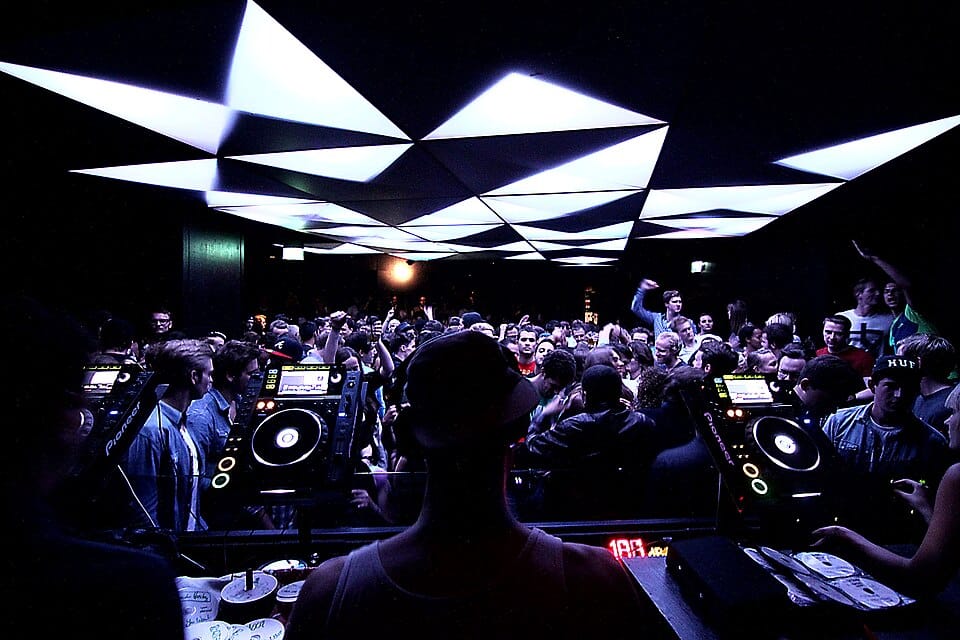
The more AI advances, the more festivals are worth
Of course, we can't know the future.
AI may make virtual experiences more attractive than reality.
VR and AR may change the very concept of a live show.
If the cost of real events rises too far, more people won't be able to afford the prices.
Even so,
as long as humans have bodies,
the real has one big strength.
The fact of being in the same place at the same time.
This can't be copied.
It can't be saved.
It can't be rewound.
You can't regenerate exactly the same thing.
That is why it has value.
And right now,
Thrive.
KKR.
CVC.
Live Nation.
FIVE.
Mohari.
SBI.
The world's big capital is moving money around those "irreplicable experiences."
AI is not killing entertainment.
Rather,
AI widens the value gap between entertainment that can be copied and entertainment that can never be copied.
What will be strong then
is not simply a company that can make songs.
Not simply a company that owns clubs.
Not simply a company that can run festivals.
It is whoever can gather people in the same place and make them go wild in the same moment.
AI can make 1 million songs.
But
it can't generate the passion of 50,000 people.
At least, not yet.
So the further AI advances,
among festivals, live shows, and clubs too,
the value of places that offer "something you can only get by going there" may, if anything, keep rising.
Main sources
Axios, "Joshua Kushner's Thrive moves into pro sports investing"
www.axios.com/2026/04/27/joshua-kushner-sports-giants-thrive-eternal
The founding of Thrive Eternal, its investment in the San Francisco Giants, the investment theme of "technology cannot replicate," and live venues and festivals as candidate targets.
Reuters, "OpenAI sees $11.6 billion revenue next year, offers Thrive chance to invest again"
Thrive Capital's investment of over $1 billion in OpenAI and its right to invest more.
KKR / CVC, "Superstruct Entertainment"
www.cvc.com/media/news/2024/2024-10-28-cvc-joins-kkr-in-the-acquisition-of-superstruct-entertainment
The investment in Superstruct, which operates more than 80 music festivals. It owns Sónar, Defqon.1, Wacken Open Air, and others.
Boiler Room, "About / Ownership"
In January 2025, Boiler Room was sold by DICE to Superstruct.
FIVE Holdings, "FIVE Acquires The Pacha Group"
five-holdings.com/five-acquires-the-pacha-group
Acquisition of Pacha Group for €302.5 million, including the Pacha brand, trademarks, and more.
FIVE Holdings 2025 results
Pacha Group revenue of €132 million, up 18% year on year; EBITDA of €41 million; about 484,000 Pacha Ibiza tickets sold.
Mohari Hospitality, "Acquisition of Tao Group Hospitality"
www.prnewswire.com/news-releases/mohari-hospitality-to-acquire-tao-group-hospitality-further-enhancing-its-luxury-portfolio-301799370.html
Acquisition of Tao Group at an enterprise value of $550 million.
Live Nation, "Investing $1 Billion in U.S. Music Venues"
news.livenationentertainment.com/news/live-nation-investing-1-billion-in-u-s-music-venues-boosting-americas-economic-and-cultural-revival
$1 billion invested in building and renovating 18 venues in the US.
Live Nation 2025 financial results / investor materials
www.sec.gov/Archives/edgar/data/1335258/000133525825000053/lyv-2025q1xex991er.htm
2025 capital expenditure of $700 million to $800 million for venue expansion and improvement, with an expected average IRR of over 20%.
Live Nation Form 10-K (fiscal 2025)
www.sec.gov/Archives/edgar/data/1335258/000133525826000009/lyv-20251231.htm
Actual 2025 capital expenditure of $1,050.97 million ($925.6 million revenue-generating).
SBI Holdings, "MUSIC CIRCUS becomes a consolidated subsidiary"
www.sbigroup.co.jp/news/2025/0910_15722.html
Acquisition of a majority of MUSIC CIRCUS. It cites "the ability to form passionate communities starting from real events."
SBI Neo Media Holdings / Dentsu / Dentsu Digital
The "SBI Neo-Media Ecosystem" fusing finance with IP and media, and the "emotion economy" concept.
SBI / Fuji Media Holdings
Talks spanning the "emotion economy" that turns empathy, trust, and passion into value, investment in IP, real events, financial functions, and more.
SBI / W TOKYO
Capital and business alliance in IP and content, including TOKYO GIRLS COLLECTION.
SBI / Star Music Entertainment
Basic agreement toward making a music and social media marketing company a subsidiary.
The Japan Times, "SBI Holdings eyes Sphere arena in new Tokyo entertainment push"
www.japantimes.co.jp/business/2026/04/01/companies/sbi-sphere-arena
The Tokyo Sphere concept. Odaiba as a candidate site, negotiations with MSG Entertainment, and a construction cost estimated at the time at about 350 billion yen.
SBI / Las Vegas Grand Prix
The partnership with the F1 Las Vegas GP, SBI's view that "the city itself is a giant medium," and its emotion-economy strategy.